The Crash Is Over. The Damage May Just Be Getting Started.
You felt shaken after the crash, but nothing seemed broken. You drove home. You iced your neck. You told yourself you’d feel better by morning.
Two weeks later, you’re still in pain. Now you’re wondering whether you waited too long, for your health and for your claim.
Missed car accident injuries are more common than most people realize. The problem is not that the injuries are rare. The problem is that many of them are designed, biologically, to hide.

Why Car Accident Injuries Are So Easy to Miss
When your body experiences trauma, it responds immediately with a surge of adrenaline and cortisol. These hormones suppress pain signals, keep you alert, and help you function in a crisis. They do their job well enough that many accident victims genuinely feel fine in the minutes and hours following a crash.
As those hormones clear your system, typically within 24 to 72 hours, inflammation builds, nerves become irritated, and soft tissue swelling reaches its peak. What felt like minor stiffness at the scene can become sharp, limiting pain by day three or four.
This is the window that matters most. According to the National Institute of Neurological Disorders and Stroke, soft tissue and spinal injuries frequently produce delayed symptoms because the inflammatory response takes time to develop fully. A car accident doctor who evaluates you during this window can document findings while they are acute — before gaps in your care give an insurance adjuster room to argue.
The Most Commonly Missed Car Accident Injuries
Whiplash and Cervical Soft Tissue Injuries
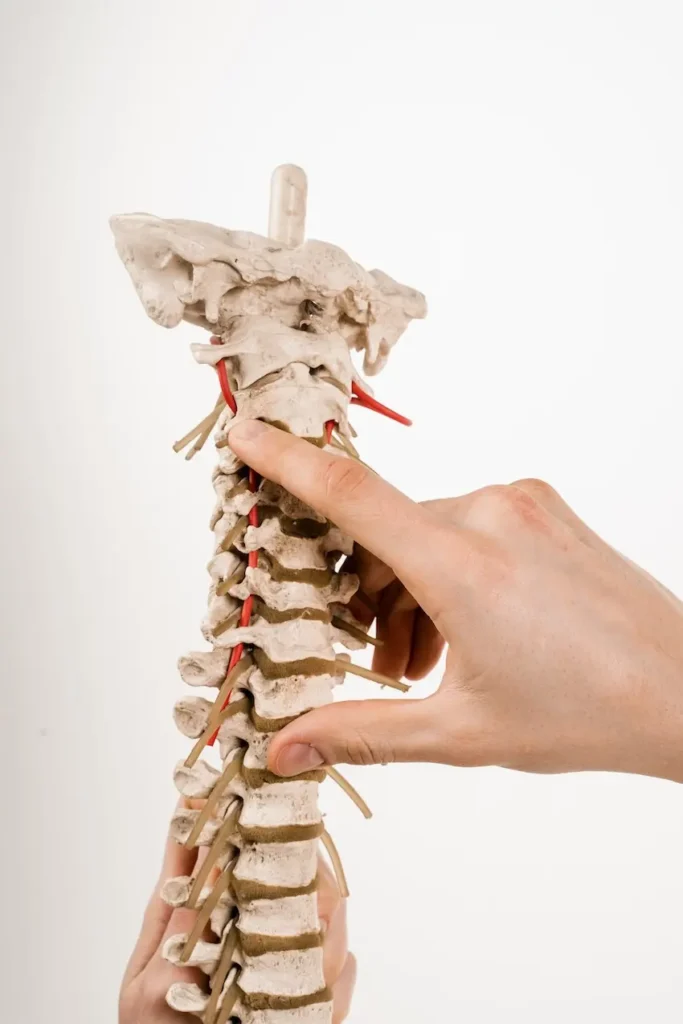
Whiplash is the most frequently missed injury after a rear-end or low-speed collision. The rapid forward-and-backward motion of the head places extreme stress on the muscles, tendons, and ligaments of the cervical spine. At lower impact speeds, there may be no immediate pain, just mild stiffness that victims dismiss as soreness from the tension of the event.
Left untreated, cervical soft tissue injuries develop scar tissue, chronic tightness, and restricted range of motion. A car accident doctor evaluates cervical range of motion, tenderness patterns, and neurological signs that a general urgent care visit routinely misses.
Herniated and Bulging Discs
The discs between your vertebrae absorb shock. During a collision, the force compresses and twists the spine in ways that can rupture or bulge those discs without causing immediate pain. Disc injuries frequently go undiagnosed for weeks because the initial complaint, back stiffness, seems minor.
As inflammation increases, a bulging disc can begin pressing on nearby nerve roots. Radiating pain down one or both legs, numbness, tingling, and weakness in the extremities are the warning signs. Without advanced imaging, specifically an MRI, disc injuries remain invisible on standard X-rays. A car accident doctor orders the right imaging at the right time.
Concussion and Mild Traumatic Brain Injury
Head trauma does not require direct impact to occur. The violent motion of a collision alone can cause the brain to shift inside the skull, producing a concussion. Mild traumatic brain injury is one of the most underdiagnosed conditions following car accidents because the symptoms, headache, difficulty concentrating, light sensitivity, irritability, disrupted sleep, are easy to attribute to stress or general soreness.
Concussion symptoms that go unaddressed can persist for months and develop into post-concussion syndrome. Early neurological evaluation documents these findings before they become harder to connect to the crash.
Shoulder Injuries
The shoulder absorbs significant force during a collision, whether from bracing against the steering wheel, from seatbelt loading, or from the door on impact. Rotator cuff tears, labral damage, and acromioclavicular joint injuries frequently present as mild shoulder ache that patients assume will resolve on its own.
These injuries rarely resolve without treatment. Without imaging and a clinical evaluation, they are invisible on a medical record — which means they are also invisible in a legal claim.
Knee and Lower Extremity Injuries
In frontal and side-impact collisions, knees frequently strike the dashboard, door panel, or center console. Ligament sprains, meniscus tears, and patellar injuries can occur with impacts that seem minor from the outside.
Patients often walk away from the scene and spend days attributing knee pain to general muscle soreness before realizing the joint is actually damaged. By that point, a gap in treatment has already formed.
Internal Injuries and Organ Damage
Not every missed injury is a soft tissue issue. Blunt abdominal trauma from seatbelt loading or steering wheel impact can cause bruising or injury to the spleen, liver, or kidneys. These injuries may produce vague abdominal discomfort that does not immediately suggest anything serious.
Internal injuries that go undetected can become life-threatening. Any abdominal pain, bloating, or unexplained fatigue following a crash warrants immediate emergency evaluation. Once you are cleared by the ER, a car accident doctor coordinates follow-up care, orders confirmatory imaging, and ensures the full injury is documented in your post-accident medical record before you engage with any insurer.
Psychological Injury — PTSD and Acute Stress Response
Physical injuries are not the only ones missed after a crash. Acute stress response and post-traumatic stress disorder are genuine medical conditions that develop after traumatic events. Anxiety behind the wheel, intrusive memories, sleep disruption, and emotional withdrawal following a crash are symptoms, not personality responses.
PTSD and psychological injury are documented by medical providers, can be included in personal injury claims, and require treatment. A car accident doctor who performs a comprehensive intake evaluation will screen for these symptoms, a walk-in urgent care visit will not.
If any of the conditions above sound familiar, you are not alone, and you are not out of options. The next step is understanding why the provider you choose matters as much as the timing.
Why a Car Accident Doctor Catches What Others Miss
General emergency rooms and urgent care clinics are equipped for acute trauma, broken bones, lacerations, life-threatening emergencies. They are not equipped to perform the comprehensive musculoskeletal and neurological evaluations that car accident injuries require.
A car accident doctor is trained specifically to identify the full spectrum of collision injuries, order the appropriate diagnostic imaging, and document findings in a format that supports both your medical recovery and your legal claim. That documentation, injury timeline, diagnostic results, treatment notes, and prognosis, is what connects your injuries to the crash in an insurer’s eyes.
HURT 911® connects accident victims with experienced car accident doctors who specialize in exactly this kind of evaluation. Same-day appointments. Zero upfront costs. No insurance required.
What Happens When Injuries Go Undiagnosed
The consequences of missed car accident injuries run in two directions simultaneously.
Medically, untreated soft tissue injuries develop chronic pain conditions, nerve compression syndromes, and structural damage that becomes significantly more difficult and expensive to address months later. Early intervention produces the best long-term outcomes.
Legally, every day without documentation is a day an insurance adjuster can use against you. Gaps between the crash date and your first medical evaluation, missed appointments, and incomplete records are the most common tools used to minimize or deny legitimate injury claims. The medical record you build in the first weeks after a crash is the foundation of any compensation you pursue.
Frequently Asked Questions About Missed Car Accident Injuries
What are the most common car accident injuries that are missed?
Whiplash, herniated discs, concussion, shoulder injuries, knee injuries, and psychological trauma are the most frequently missed injuries after a car accident. All of them share one characteristic, they may produce little or no pain at the scene, only to develop fully in the hours or days that follow. Without a comprehensive evaluation from a car accident doctor shortly after the crash, these injuries go unrecorded and unaddressed.
How long after a car accident can symptoms appear?
Many car accident injuries produce symptoms 24 to 72 hours after the crash, once adrenaline levels drop and inflammation begins to peak. Herniated disc symptoms can take longer to develop, appearing weeks after the collision as swelling gradually increases pressure on nearby nerves. Concussion symptoms, including headache, cognitive difficulty, and sleep disruption, may not be noticed until the patient returns to normal activity and realizes something is wrong.
Does a missed injury affect my insurance claim?
Yes, significantly. Insurance companies look at the medical record that exists at the time of a claim, not at what might have been documented if you had seen a doctor sooner. Injuries that were never evaluated, diagnosed, or treated are extremely difficult to include in a settlement negotiation. The longer the gap between the crash and your first medical visit, the more room an adjuster has to argue the injury is unrelated, pre-existing, or minor.
Can I see a car accident doctor if I do not have health insurance?
Yes. HURT 911® connects accident victims with car accident doctors who treat on a lien basis, meaning there are no upfront costs and no health insurance required. Treatment fees are deferred and paid from your settlement. You receive the same quality of evaluation, imaging, and documentation regardless of your insurance status.
Why should I see a car accident doctor instead of my regular doctor?
Your primary care physician is not trained to identify the specific injury patterns that occur in vehicle collisions, order the right diagnostic imaging, or produce the documentation format that personal injury claims require. A car accident doctor specializes in collision injuries, they know what to look for, how to document it, and how to structure a medical record that supports both your recovery and your legal case.

Do Not Wait to Be Evaluated
If you were in a car accident, even a minor one, and you are experiencing any of the following, see a car accident doctor today:
- Neck stiffness or soreness that did not appear immediately after the crash
- Headaches that started after the accident
- Back pain or pain radiating into your arms or legs
- Shoulder, knee, or joint pain you are attributing to “general soreness”
- Difficulty concentrating, light sensitivity, or disrupted sleep
- Abdominal discomfort or unexplained fatigue
- Anxiety, intrusive thoughts about the crash, or reluctance to drive
You do not need to be in severe pain to need a medical evaluation. The injuries most likely to be missed are exactly the ones that feel manageable at first.
Contact HURT 911® today to schedule your evaluation. Same-day appointments are available, and there are zero upfront costs. Learn more about how HURT 911® works and why accident victims across the country trust our network to get them the care and documentation they need from day one.
Call 888-968-5069. Know who to call.